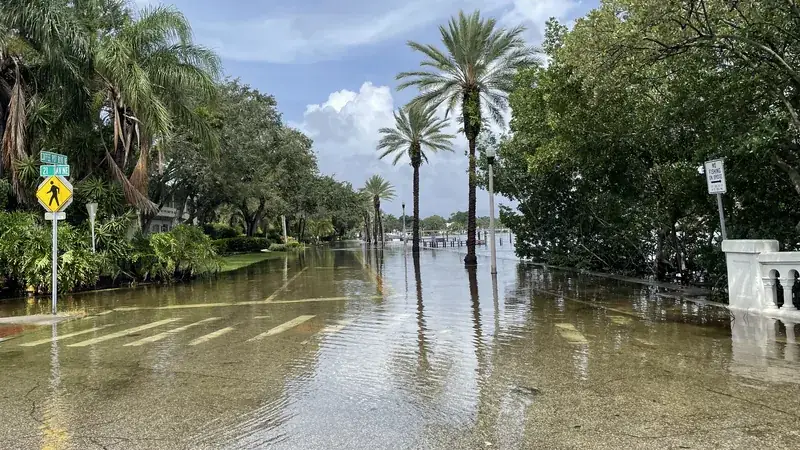
St. Petersburg sits on the Pinellas peninsula with Tampa Bay on one side and Boca Ciega Bay and the Gulf on the other, so flooding can come from two directions: storm surge pushing in from the water, and heavy rain that overwhelms storm drains. In 2024 the city got both. During Hurricane Helene, the St. Petersburg tide station recorded its highest water level since its records began in 1947, according to the National Hurricane Center, and surge flooded low-lying waterfront neighborhoods. Two weeks later, Hurricane Milton brought up to about 20 inches of rain near St. Petersburg. Whether the water came from the bay or the sky, cleanup follows the same order. Here is how to start.
1. Make it safe before you start
- If water reached outlets, appliances or the electrical panel, do not go in or touch anything electrical until the power has been shut off by Duke Energy or an electrician.
- After saltwater surge, assume wiring, outlets, water heaters, AC equipment and appliances that were underwater are damaged, even if they seem to work. Salt keeps corroding metal after the water drains.
- Never walk or drive through floodwater. It can hide open drains, debris and downed lines, and surge and street flooding are both contaminated.
- If you smell gas, leave and call 911 or the gas company from outside.
- Watch for sagging ceilings, soft floors and loose stairs or railings, especially in older homes and ground-floor units.
2. Check official flood and storm information
- City of St. Petersburg flooding page (stpete.org): city flood information, storm updates and links to the city hurricane center.
- Pinellas County Emergency Information (pinellas.gov/emergency-information): county storm updates, shelters and Alert Pinellas, plus the county's flood information page.
- National Weather Service Tampa Bay (weather.gov/tbw): flood watches and warnings, coastal flood and storm surge alerts.
- FEMA Flood Map Service Center (msc.fema.gov): your official flood zone.
- Know Your Zone (floridadisaster.org/knowyourzone): your hurricane evacuation zone. Evacuation zones and flood zones are different, so check both.
3. Document before you remove anything
- Photograph and video every room, the waterline on walls, flooring, cabinets, furniture, appliances and the outside of the house, including the seawall or dock if you have one.
- Write down when the water came in, how high it rose and where it came from: surge or rising water, rain through the roof or windows, or a backup through drains. That decides which policy applies.
- Photograph items before they go to the curb, keep a list and save a small sample of flooring or carpet if your adjuster asks for one. Keep receipts for everything you buy for the cleanup.
4. Report the claim to the right policy
- Storm surge and rising water are flood, covered only by a flood policy (NFIP or private). See flood vs water damage claims.
- Wind damage that let rain in is usually a homeowners claim, often with a separate hurricane deductible for named storms.
- When both happen, document them separately: roof and window openings in one set of photos, the flood waterline in another.
- Condo owners: the association's master policy and your HO-6 split the coverage. See who pays for condo water damage in Florida.
The Florida water damage claim guide covers the steps after you report.
5. Flood cleanup, step by step
- Gear up. Rubber boots, waterproof gloves, eye protection and an N95 mask. Keep children, pets and anyone with breathing problems out of the work area.
- Get the water out. Pump or wet-vac standing water, then shovel out mud and silt while it is still wet.
- Remove what cannot be saved. Carpet and pad, mattresses, upholstered furniture and particleboard cabinets soaked by floodwater usually have to go.
- Open the walls. Drywall and insulation that soaked up floodwater usually need to be cut out above the waterline so the studs and wall cavity can dry.
- Clean and disinfect. Wash hard surfaces the water touched with detergent and water, then disinfect. Never mix bleach with ammonia or other cleaners.
- Dry, then check. Run dehumidifiers and fans, with windows closed if the outside air is humid. Make sure framing and subfloor are dry before anything is closed up.
The EPA advises drying wet materials within 24 to 48 hours to help prevent mold, which is hard in Tampa Bay humidity. The first 24 hours after water damage checklist covers the order, and mold after a hurricane in Florida covers what to watch for in the weeks after.
6. Before you rebuild
- If your home is in a FEMA high-risk flood zone and repairs cost about half or more of the building's value, it may be treated as substantially damaged and have to meet current flood rules, which can mean elevating it. Check with the City of St. Petersburg before major repairs.
- Electrical, plumbing, HVAC, roofing and structural repairs usually need permits. Ask the city what applies before work starts.
- Keep every invoice and receipt; they matter for claims and for any substantial damage review.
St. Petersburg homes: what to watch for
- Low-lying waterfront neighborhoods. Streets near the bay and canals can flood during surge and some high tides. After any flooding, check garages, storage rooms and anything kept low.
- Older homes. Many St. Pete neighborhoods have homes from the early and mid-1900s. Some sit on raised foundations, so check the crawlspace for standing water and wet insulation under the floor.
- Ground-floor condos and parking levels. Water often collects in lobbies, garages and ground-floor units, and leaks travel from unit to unit.
- AC equipment. Outdoor condensers and air handlers that sat in saltwater should be checked before they are turned back on.
When to call for help
Call if floodwater got into walls, floors or the AC system, if surge water came inside, or if the cleanup is more than you can safely handle. If you want a professional to take over, call (813) 574-3203 to be connected with a local water damage restoration company. The call is free; any work is agreed directly with the company.
See our St. Petersburg water damage page for local flood risks and storm history, plus nearby Clearwater, Tampa, Bradenton and Sarasota. In Clearwater, see the Clearwater water damage guide. The water damage restoration overview explains the drying and repair process, and the mold remediation guide covers mold that shows up after a flood.
Sources: National Hurricane Center, Hurricane Helene and Hurricane Milton reports; City of St. Petersburg flooding information; Pinellas County Emergency Information and flood information; National Weather Service Tampa Bay; Florida Division of Emergency Management, Know Your Zone; U.S. EPA mold guidance; FEMA NFIP and Flood Map Service Center. Photo: Hurricane Idalia storm surge on Coffee Pot Blvd. near the Snell Isle bridge, St. Petersburg, August 30, 2023, by Adog, Wikimedia Commons, CC BY-SA 4.0, cropped.

General information, not legal or insurance advice. Check your policy and official sources.
Frequently asked questions
What should I do first for flood cleanup in St. Petersburg?
Make sure the power is off if water reached outlets or the panel, stay out of floodwater, photograph everything before you remove anything, report the claim to the right policy, then remove water, wet materials and debris and start drying within 24 to 48 hours.
Is storm surge damage in St. Petersburg covered by homeowners insurance?
No. Storm surge and rising water are flood and are covered only by a flood insurance policy (NFIP or private). Wind or rain damage through a damaged roof or window is usually a homeowners claim, often with a separate hurricane deductible.
What has to be thrown out after a flood?
Carpet and pad, mattresses, upholstered furniture and particleboard soaked by floodwater usually cannot be saved, and wet drywall and insulation are usually cut out above the waterline. Photograph everything before it goes to the curb.
Where can I check flood warnings and my flood zone in St. Petersburg?
The National Weather Service in Tampa Bay issues flood and storm surge alerts, Pinellas County Emergency Information posts county updates and Alert Pinellas, the City of St. Petersburg has a flooding page, and the FEMA Flood Map Service Center shows your official flood zone.
Is my evacuation zone the same as my flood zone?
No. Evacuation zones (looked up through Know Your Zone) are about storm surge evacuation, while FEMA flood zones are used for flood insurance and building rules. Check both.
Can saltwater-flooded appliances and wiring be reused?
Saltwater keeps corroding metal after it drains, so wiring, outlets, water heaters and AC equipment that were underwater should be checked by a licensed electrician or technician before being turned back on.
How fast does mold grow after flooding in St. Petersburg?
The EPA advises drying wet materials within 24 to 48 hours to help prevent mold. In Tampa Bay humidity, materials that stay wet longer often start growing mold within days.
More guides
- The first 24 hours after water damage
- How a Florida water damage insurance claim works
- What affects the cost of water damage restoration
- How to choose a water damage restoration company
- Does homeowners insurance cover water damage in Florida?
- Flood vs. water damage claims in Florida (NFIP explained)
- Mold after a hurricane: a Florida homeowner's guide
- Water heater burst or leaking: what to do right now
- Ceiling leaking after rain: what to do
- Washing machine flooded the floor: what to do
- AC drain line leaking: stop the water damage
- Slab leak signs in Florida homes
- Burst pipe: what to do in the first hour
- Sewage backup: cleanup safety and what to do
- Roof leak during a hurricane or tropical storm
- Emergency Mold Removal in Florida: What to Do Right Now
- Flooded House After a Storm in Tallahassee: First Steps
- Water Damage in Clearwater, FL: What to Do First
- Water Damage in Daytona Beach, FL: First Steps for Homeowners
- Flooding in Palm Bay, FL: What to Do First
- Flood Damage in Ocala, FL: Cleanup and Repair First Steps
- Emergency Flood and Storm Cleanup in Punta Gorda, FL: What to Do First
- Flood in St. Augustine, FL: What to Do First and Where to Find Emergency Resources
- Flood or Water Damage in Pompano Beach, FL: Emergency Resources and First Steps
- Water Damage in Your Florida Home? Start Here
- Condo Leak in Florida: Who Pays, the Owner or the Association?
- Mold After an Everyday Leak: How Fast It Starts in a Florida Home
- Water Damage Checklist for Florida Renters
- A Simple Leak Prevention Checklist for Florida Homes
- Florida Flood Risk Explained: Storm Surge, Heavy Rain and What You Can Check
- A Leak Response Plan for Florida HOA and Condo Boards
- Florida Hurricane Prep Checklist for Water Damage