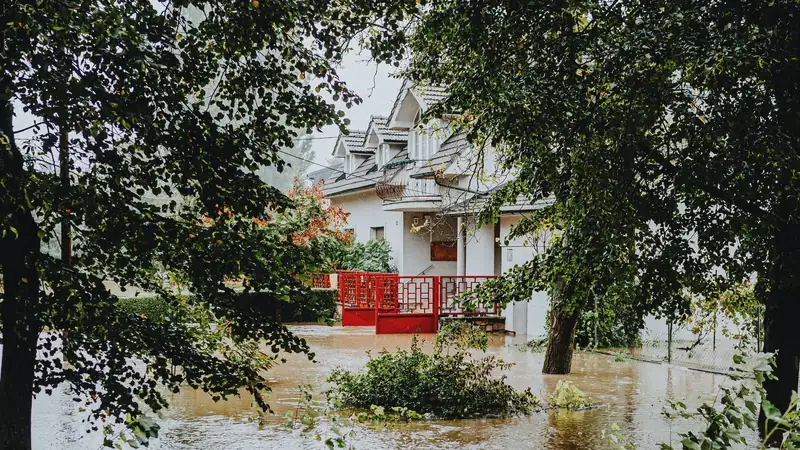
Tallahassee sits about 25 miles inland, so many residents do not think of it as a flood town. But it is one of the rainiest cities in the United States, averaging roughly 59 inches of rain a year according to the City of Tallahassee, with June through August the wettest months. Heavy summer downpours, tropical storms and hurricanes such as Hermine (2016) and Michael (2018) have all brought flooding and storm damage to the area. Here is what to do if water got into your home.
Why Tallahassee floods away from rivers
Leon County notes that flooding here is often caused by intense rain rather than a river overflowing. Water can run across the ground as sheet flow, collect in low-lying closed basins with no natural outlet, or overwhelm storm drains, and flash flooding can develop within hours. The Red Hills terrain and clay-rich soils add to fast runoff. That means a home outside a mapped flood zone can still take on water, especially along creeks, lakes and low spots.
1. Safety first
- Never drive or walk through floodwater. It can hide washed-out roads, open drains and downed power lines.
- If water reached outlets, appliances or the electrical panel, do not touch them. Have the power shut off by your electric provider or an electrician before going in.
- Watch for downed trees and limbs. Tallahassee's heavy tree canopy means fallen trees are a common storm hazard and can damage roofs and let more water in.
- If you smell gas, leave and call the gas company or 911 from outside.
- Floodwater is contaminated. Wear boots and gloves, and wash hands often.
2. Document before you clean
- Photograph and video every room, the water line on walls, damaged belongings, and the outside of the house, including any roof or tree damage.
- Note the date and time water entered and where it came from: rising water from outside, a roof leak, or both. That difference matters for insurance.
- Keep damaged items you can (or photograph them first) until your adjuster has seen them.
3. Report the claim
- Rising water from outside is flood and is covered only by a flood policy (NFIP or private), not standard homeowners insurance. See flood vs water damage claims.
- Wind or tree damage that let rain in is usually a homeowners claim, often with a separate hurricane deductible for named storms.
- Report as soon as you can and ask what you are allowed to do before the adjuster visits. Our Florida water damage claim guide walks through the steps.
4. Start drying fast
Once it is safe and documented, move wet belongings out, remove standing water and get air moving. The EPA advises drying wet materials within 24 to 48 hours to help prevent mold, and North Florida's summer humidity makes that window tight. Wet drywall, insulation and carpet pad from floodwater usually need to come out. The first 24 hours after water damage checklist covers the order of operations.
5. Prevent more damage
- Cover roof openings or broken windows once it is safe, and keep receipts; most policies expect reasonable steps to limit further damage.
- Do not run a central AC system that was underwater until it has been checked.
- Clear gutters and drainage swales around the house if debris is blocking runoff.
Local resources
- Leon County Emergency Management and the City of Tallahassee post storm updates, shelter information and debris pickup guidance after major storms.
- Leon County and the City publish flood zone maps and flood protection information; check whether your home is in a mapped flood area before the next storm.
- If you do not have flood insurance, note that NFIP policies usually have a 30-day waiting period before coverage starts, so buy well before hurricane season.
When to call for help
Call if water got into walls, floors or the HVAC system, if there was floodwater from outside, or if the cleanup is more than you can safely handle. If you want a professional to take over, call (813) 574-3203 to be connected with a local water damage restoration company. The call is free; any work is agreed directly with the company.
See our Tallahassee water damage page for local flood risks and storm history, and the water damage restoration overview for what the drying and repair process involves.
Sources: City of Tallahassee flooding brochure; Leon County flood protection information; Tallahassee-Leon County Local Mitigation Strategy; Florida State University Emergency Management; U.S. EPA mold guidance; FEMA NFIP. Photo: Helena Jankovičová Kováčová, Pexels.
General information, not legal or insurance advice. Check your policy and official sources.
Frequently asked questions
Does Tallahassee flood even though it is inland?
Yes. Tallahassee averages roughly 59 inches of rain a year, and Leon County notes that intense rainfall can cause flash flooding, sheet flow and flooding in low-lying closed basins, even outside mapped flood zones.
Is storm flooding in Tallahassee covered by homeowners insurance?
Rising water from outside is flood and is covered only by a flood insurance policy, not standard homeowners insurance. Wind or fallen-tree damage that lets rain into the house is usually a homeowners claim, often with a separate hurricane deductible for named storms.
What should I do first after my Tallahassee home floods?
Stay out of floodwater, make sure the power is off if water reached electrical outlets or the panel, photograph all damage before cleanup, report the claim, and start drying within 24 to 48 hours to limit mold.
How do I find out if my Tallahassee home is in a flood zone?
Leon County and the City of Tallahassee publish flood zone maps and flood protection information, and FEMA has a flood map service center. Homes outside mapped zones can still flood from heavy rain.
How long does flood insurance take to start?
NFIP flood policies generally have a 30-day waiting period before coverage begins, with a few exceptions, so it is best to buy before a storm is forecast.
More guides
- The first 24 hours after water damage
- How a Florida water damage insurance claim works
- What affects the cost of water damage restoration
- How to choose a water damage restoration company
- Does homeowners insurance cover water damage in Florida?
- Flood vs. water damage claims in Florida (NFIP explained)
- Mold after a hurricane: a Florida homeowner's guide
- Water heater burst or leaking: what to do right now
- Ceiling leaking after rain: what to do
- Washing machine flooded the floor: what to do
- AC drain line leaking: stop the water damage
- Slab leak signs in Florida homes
- Burst pipe: what to do in the first hour
- Sewage backup: cleanup safety and what to do
- Roof leak during a hurricane or tropical storm
- Emergency Mold Removal in Florida: What to Do Right Now
- Water Damage in Clearwater, FL: What to Do First
- Water Damage in Daytona Beach, FL: First Steps for Homeowners
- Flooding in Palm Bay, FL: What to Do First
- Flood Cleanup in St. Petersburg, FL: First Steps for Homeowners
- Flood Damage in Ocala, FL: Cleanup and Repair First Steps
- Emergency Flood and Storm Cleanup in Punta Gorda, FL: What to Do First
- Flood in St. Augustine, FL: What to Do First and Where to Find Emergency Resources
- Flood or Water Damage in Pompano Beach, FL: Emergency Resources and First Steps
- Water Damage in Your Florida Home? Start Here
- Condo Leak in Florida: Who Pays, the Owner or the Association?
- Mold After an Everyday Leak: How Fast It Starts in a Florida Home
- Water Damage Checklist for Florida Renters
- A Simple Leak Prevention Checklist for Florida Homes
- Florida Flood Risk Explained: Storm Surge, Heavy Rain and What You Can Check
- A Leak Response Plan for Florida HOA and Condo Boards
- Florida Hurricane Prep Checklist for Water Damage